Built-in refrigeration · Orange County
Built-In Refrigerator Repair
Side-by-sides, over-and-unders, French doors, columns and refrigerator drawers built into the cabinetry, from Sub-Zero, Thermador, Viking, Miele, Monogram, Fisher & Paykel, Dacor and the other luxury brands. We repair them in their openings, behind the panels you chose, and you approve a written price first.
$79 service call, applied to the repair. Monday to Saturday, 8 AM to 7 PM.
- $79service call, applied to the repair you approve
- In-housesealed-system work: compressors, evaporators, leaks
- Since 2022CA BHGS #50388, EPA-certified
- 90 daysno-fee return visit if the same fault comes back
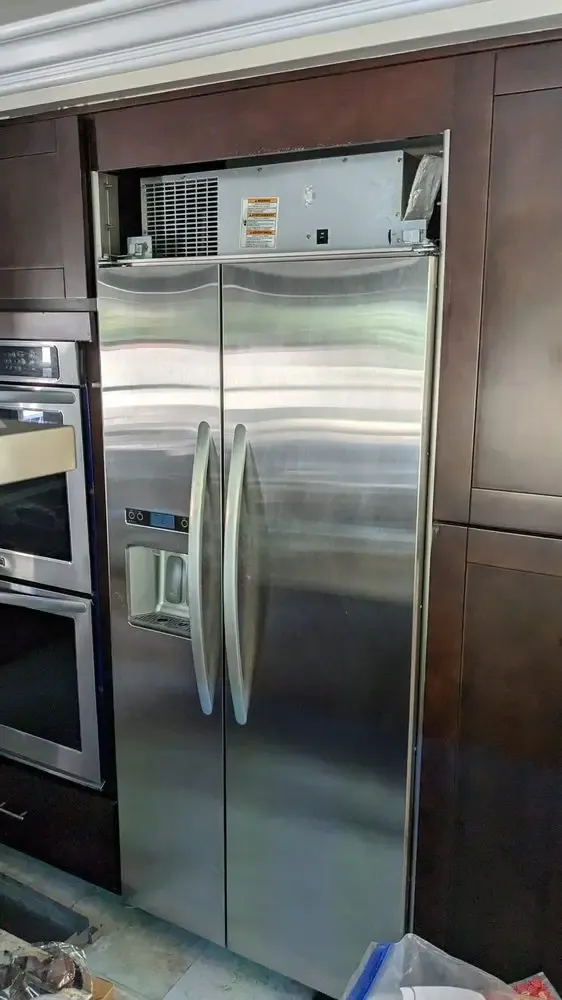
In short: a built-in fails like any refrigerator but is repaired differently: the machinery sits behind a grille above or below the doors, the cabinet is anchored in place, and the doors often carry custom panels. Most calls are air flow, fans, defrost, doors, water and ice, or a sensor or board. Sealed-system faults are rarer, and we repair them in-house.
What we repair
Full-size and drawer built-ins, with stainless, framed or integrated wood-panel doors:
- Sub-Zero: Classic built-ins, Designer and Integrated units, PRO 48, and the 600 and 700 series. See Sub-Zero repair.
- Thermador Freedom columns and Viking 5 Series built-ins: Thermador and Viking refrigerator repair.
- Miele MasterCool and Monogram built-ins: Miele and Monogram refrigerator repair.
- Fisher & Paykel, Dacor, JennAir and Gaggenau: Fisher & Paykel, Dacor, JennAir and Gaggenau.
Wine columns, ice machines and outdoor units have their own pages: wine storage, ice makers and outdoor kitchens. See all services.
Top or bottom: where the machinery lives
A built-in has no room behind it, so the compressor, condenser and fan sit above or below the doors and breathe through the grille in front.
| Model line | Machine compartment | How it cools |
|---|---|---|
| Sub-Zero Classic (BI, CL), PRO 48 | Top, behind the grille | Combination models run two separate systems |
| Sub-Zero Designer, Integrated, 700 series | Bottom, behind the toe kick | Each column is its own unit; tall combination units have two systems |
| Thermador Freedom columns | Bottom, behind the toe kick | Each column has its own compressor and controls |
| Viking 5 Series | Top, behind the grille | One variable-speed compressor; freezer coil air cools the refrigerator |
| Monogram built-in side-by-side | Top, behind the grille | One compressor (variable-speed on later models), one coil, a damper to the fresh-food side |
| Miele MasterCool | Bottom, behind the toe kick | Single columns have their own compressor; fridge-freezers share one, with a valve switching between two coils |
| Fisher & Paykel integrated columns | Bottom, behind a magnetic toe kick | Inverter-driven compressor |
A top grille collects kitchen grease; a toe kick pulls in pet hair and remodel dust from the floor. On a single-system Viking or Monogram, a warm refrigerator with a cold freezer usually points to air flow between the sections. On a two-system Sub-Zero or a pair of columns, it points to the warm side alone.
What is different about a panel-ready refrigerator
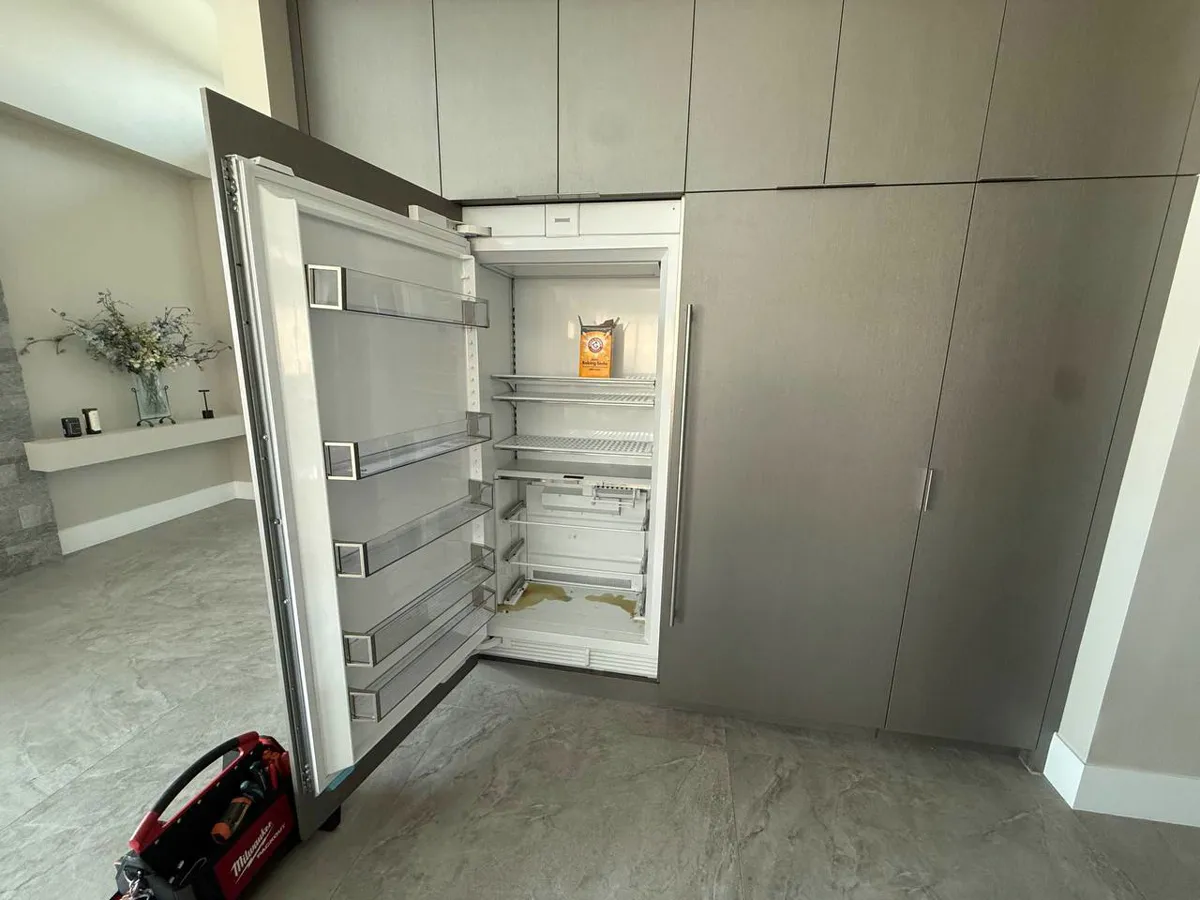
A panel-ready door takes a front made by your cabinetmaker. That adds failure points a freestanding refrigerator never has.
- Panel weight. Each door has a maximum panel weight. A heavier hardwood, glass or stone panel wears the hinge and closer early and pulls the door out of line, so the gasket stops sealing.
- Level to the floor. Sub-Zero says to level against the floor, not square the unit to the cabinets; one squared to an uneven cabinet run can have doors that will not close on their own.
- Anchoring. A built-in weighs several hundred pounds and tips forward with the doors open, so we check the anti-tip brackets before sliding out a unit tray or pulling it forward.
- Ventilation openings. The grille and its cutouts are part of the cooling system; covering them, even against remodel dust, makes the compressor run hot.
- Water connection. A slow drip or weak ice often starts at the water line hookup; see refrigerator maintenance.
A drifting door, a sweating frame or frost in one drawer often traces back to one of these; we tell you when the fix is a cabinetry job.
How we work in a finished kitchen
- Floors and panels protected before the grille comes off.
- Front access. Fans, defrost parts, sensors, valves, boards and most sealed-system parts come out through the grille, toe kick or interior, panels left on.
- Pulling out only when required. Tubing at the back of the cabinet or a leak inside the foam can mean pulling the unit; we say so before we start.
- The control read first. Most current built-ins keep a fault history, and we read it before anything is reset.
- Lead times up front. Common parts are on the van; brand parts usually arrive in a few business days.
The faults we see most on built-ins
Air flow at the condenser
What it usually is: a coil matted with dust, hair or grease, or a blocked grille. The compressor runs long, the sections drift warm and the heat ages compressor and fan.
What you can check: with the breaker off, look at the coil through the grille or toe kick, and keep the floor grille clear.
What we do: clean the whole coil, check the fan and blade position, and confirm recovery. See maintenance.
Fans and their drives
What it usually is: a worn condenser or evaporator fan. On most current built-ins the board drives each fan, so a silent fan can also be the board or a connector.
What you can check: listen at the grille and inside each section. A new squeal or rattle often comes first.
What we do: test the motor and its signal, then replace whichever failed.
Defrost and drains
What it usually is: a failed defrost heater or sensor, or a clogged drain that freezes. The section cools for a few days, then fades, with ice on the back wall or water under the drawers.
What you can check: frost on the rear panel and water at the bottom. Do not chip at ice.
What we do: replace the failed part, clear the drain and pan, and watch the next defrost. See frost buildup.
Doors, hinges and gaskets
What it usually is: a worn closer cam, a flattened gasket, or a door dropped under a heavy panel. Humid air gets in all day.
What you can check: whether the door lines up with its neighbors and the gasket touches all the way round.
What we do: replace closer, hinge or gasket and set the unit level. See door not closing.
Ice makers and water
What it usually is: low pressure, an old filter, a valve worn by hard water, a frozen fill tube or a tired module. On dispenser models the door flap and its motor wear out too, as on our Thermador ice dispenser repair in Irvine (September 2026).
What you can check: the shutoff valve, the filter date and the ice maker switch.
What we do: test flow, valve and module. See ice maker repair.
Sensors, boards and inverters
What it usually is: a sensor that reads wrong, a board output that no longer switches, or the drive for a variable-speed compressor. Brands show it differently: EE on a Sub-Zero Classic, F-codes on Miele, four-digit fault codes on Monogram. Fisher & Paykel columns store FC codes that only a technician can read in diagnostic mode.
What you can check: the display. Sabbath, showroom and vacation modes look like faults and are settings.
What we do: read the stored faults and test the part. See Sub-Zero and Viking codes.
Sealed system
What it usually is: a leak, a restriction or a compressor that no longer pumps. The rarest fault, and the one that most changes the decision.
What you can check: nothing. Clean coil, running fans and still warm means call.
What we do: confirm with measurements, then lay out the options with a written price. See a Sub-Zero evaporator leak in Irvine (July 2026), a GE Monogram refrigerant leak at an Orange County police department (March 2025) and sealed-system repair.
What built-in refrigerator repair costs
The service call is $79. It covers the trip and the diagnosis, and it is applied to the repair when you approve the written price.
Built-in refrigerator and freezer repair (Sub-Zero, Thermador, Viking, Monogram, Miele)
| Repair | Typical price, parts and labor |
|---|---|
| Condenser cleaning and performance check | $150 to $250 |
| Condenser fan motor | $350 to $600 |
| Evaporator fan motor | $350 to $650 |
| Temperature sensor (thermistor) | $250 to $450 |
| Defrost heater or defrost termination | $350 to $650 |
| Water valve | $300 to $550 |
| Door gasket, per door | $300 to $600 |
| Door hinge or closer cam | $300 to $650 |
| Ice maker assembly | $450 to $900 |
| Electronic control board | $650 to $1,300 |
| Refrigerant leak repair and recharge | $900 to $2,000 |
| Evaporator replacement | $1,200 to $2,500 |
| Compressor replacement (sealed system) | from $2,000 |
Typical Orange County ranges for parts and labor. The $79 service call is applied to any of them. Parts that ship from the manufacturer and older or discontinued models can run higher. You get the exact written price after the diagnosis and before any work starts.
Seniors and veterans get 20% off the repair, repeat customers 15%. For an older unit with a sealed-system fault, see the repair or replace guide; every appliance is on the pricing page.
How a visit goes
- Call or book online. Brand, model and the symptom; a photo of the rating tag lets us check parts first. Max, the owner, is a working technician and answers the phone.
- Diagnosis in place, same-day or next-day depending on the schedule.
- Written price with the parts lead time. It does not change once we begin.
- Repair from the van, or on a second visit when a brand part arrives.
- Warranty on parts and labor; a return visit for the same fault within 90 days has no service-call fee.
Prefer to write first? Use the contact page.
Talk to the technician first
Monday to Saturday, 8 AM to 7 PM. The $79 service call is applied to the repair.
Built-in refrigerator repair: questions
Can you repair a panel-ready refrigerator without taking the panels off?
Almost always. The work goes through the grille, toe kick and interior; only some hinge or closer jobs mean lifting a door off, panel and all.
How is a built-in repair different from a regular refrigerator repair?
The parts work the same way, but the unit stays anchored in its opening, the machinery is reached from the front, and many built-ins run two systems and variable-speed parts.
My panel-ready door sags and no longer seals. Is it the hinge or the panel?
Often both. A panel heavier than the door is rated for wears the hinge and closer early. We replace the worn parts and tell you if the panel itself is over the limit.
Where is the model and serial number on a built-in?
On a rating tag near the top hinge: in the freezer on a Sub-Zero side-by-side, in the refrigerator on over-and-unders and single-zone units, and on the upper drawer's side wall on some columns and drawer units. Read us the letters at the end too.
How soon can you come?
Same-day or next-day Monday to Saturday, depending on the schedule. We are open Monday to Saturday, 8 AM to 7 PM, closed Sunday, and cover all of Orange County from Irvine.
Are you a factory service center for these brands?
No. OC Built-In is an independent service of Cactus Appliance, California BHGS Major Appliance Repair registration #50388. If your unit is still under the manufacturer's warranty, call the manufacturer first.